



By ALLRESIST GmbH
Supplier Info
Product Type:
Parts & Consumables
Application:
Chemicals & Photoresists
Product Description:
The Allresist AR-N 7520 Series is a high-performance negative photoresist engineered for micro- and nanolithography applications demanding precision, stability, and consistency. Designed for both research laboratories and industrial fabrication, AR-N 7520 ensures sharp pattern definition, uniform coatings, and excellent etch resistance across various substrates.
Characterisation:
- E-beam, deep UV, i-line.
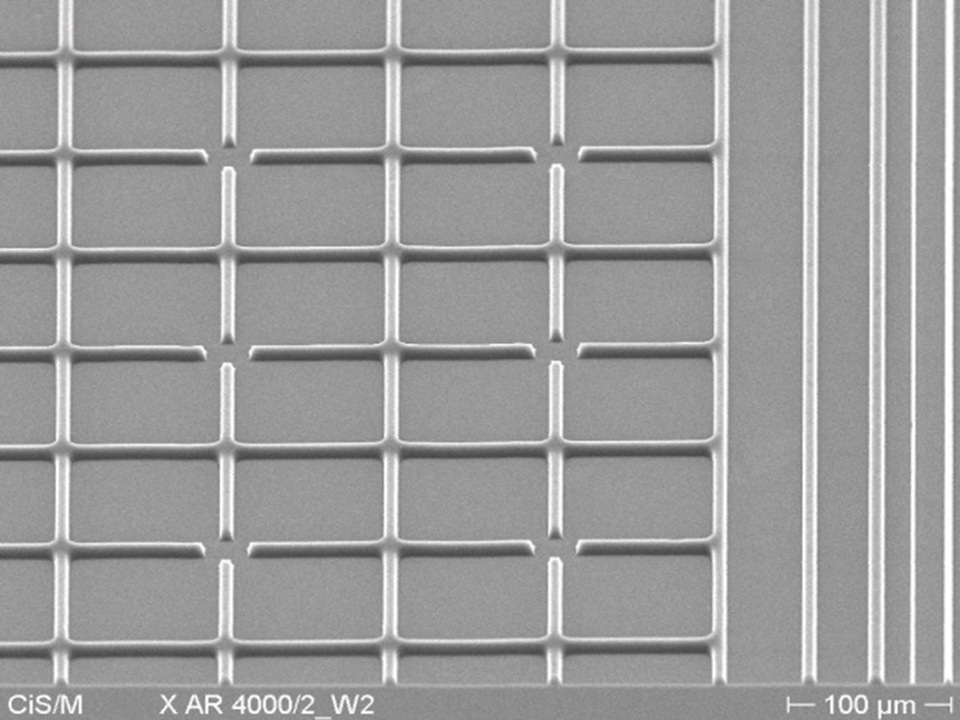
- Very high contrast, excellent transfer of structures, high-precision edges.
- Mix & match processes between e-beam and UV exposure 248-365 nm.
- Highest resolution, very process-stable (no CAR).
- Plasma etching resistant, temp.-stable up to 140 °C.
- Novolac, organic crossl. agent, safer solvent PGMEA.
AR-N 7520.073 Properties:
- Solids content: 7.3%
- Viscosity 25 °C: 2.3 mPas
- Film thickness/4.000 rpm: 0.1 µm
- Storage temperature: 10-18 °C
AR-N 7520.18 Properties:
- Solids content: 18%
- Viscosity 25 °C: 4.2 mPas
- Film thickness/4.000 rpm: 0.4 µm
- Storage temperature: 10-18 °C
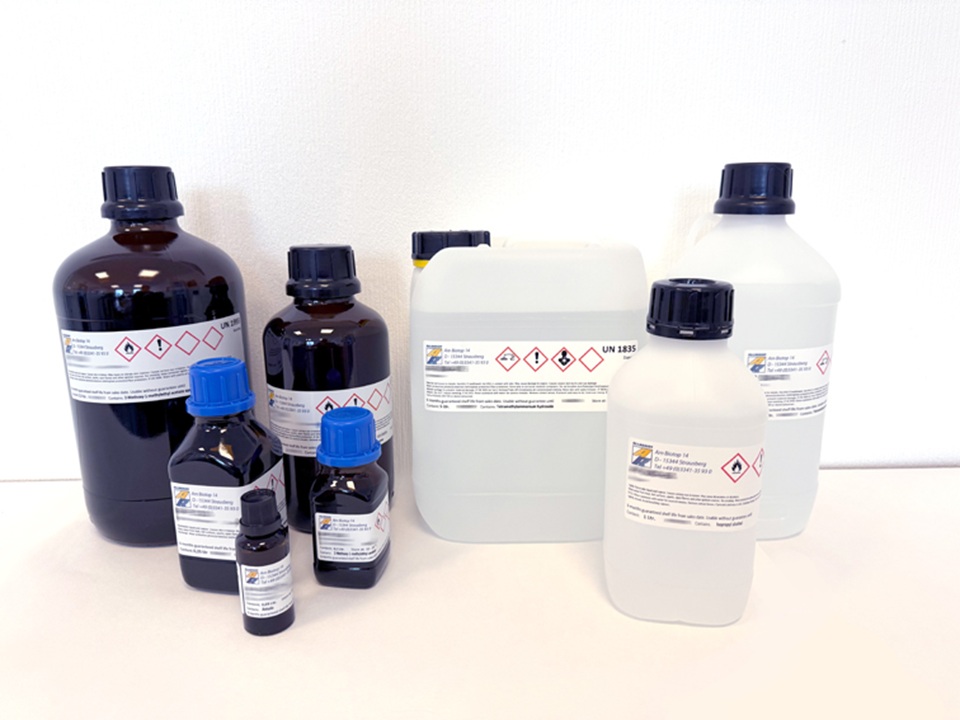
Available to order in pack sizes:
100 ml
250 ml
1L
Pricing available on request.
There are currently no videos available.
Processing Instructions:
These resists are predestined for e-beam exposure, but also suitable for UV exposure. Mix & match processes are possible if both exposure methods are carefully coordinated. During e-beam exposure, the resist works in a negative mode. (For details on Mix & Match, see AR-N 7520 new). Due to their composition, resists AR-N 7520 are approximately 8 x more insensitive than resists of the series AR-N 7520 new. The required higher dose predestines these resists for the production of very precise structural edges, since due to the high electron density edges are perfectly reproduced. For the very high imaging quality however, longer writing times have to be accepted.
The developer dilution should be adjusted with DI water such that the development time is in a range between 20 s and 120 s. By dilution of the developer, contrast and development rate can be influenced to a large degree. A stronger dilution results in an increased contrast and a reduced development rate.